When an Injured Officer Becomes a Test Case
Originally published on January 29, 2026
What the January 28, 2026, Council Meeting Really RevealedOn January 28, 2026, the Mount Vernon City Council met for what appeared to be a routine session. Acting Council President Jaevon Boxhill reviewed the agenda, and the Council approved contracts and amended fees.But the public comment period told a different story—one about how this city treats its injured officers, its immigrant neighbors, and its own residents’ right to know what government is doing in their name.
1. The Derek Williams Case: “Biblical Wickedness.”
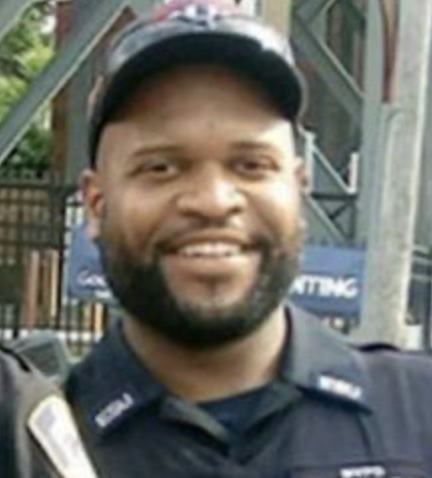
Most of the public comments focused on Officer Derek Williams, a Mount Vernon police officer who:
- Worked double shifts during COVID,
- Contracted COVID in the line of duty,
- Now has severe kidney disease and spends nine hours a day, seven days a week on dialysis,
- And then received a termination letter from the city—cutting off his health coverage.
Retired MVPD officer Donald Moore Jr. and two representatives from Blacks in Law Enforcement of America, Damon K. Jones and Michael Hannon, laid out serious claims:
- Williams was denied a proper General Municipal Law §207-c hearing, which determines line-of-duty benefits.
- Deputy Chief Gregory Addison allegedly told him that a COVID-19 infection while on duty is not a line-of-duty injury.
- The city received millions in federal COVID relief, but still pushed to terminate an officer whose kidneys failed after serving through the pandemic.
- This fits a broader pattern: Black officers across Westchester are forced into long, expensive battles for disability pensions that others obtain more easily.
One speaker called what is happening to Williams “biblical wickedness.” Moore also proposed a clear fix:207-c decisions should not rest with a single police executive. They should be reviewed by Corporation Counsel or another neutral body, with the law—not ego—guiding the outcome.How the Council RespondedCouncil members expressed sympathy and repeatedly praised Williams’ service. Boxhill noted he and Williams grew up together and said he’d spoken with the mayor, Corporation Counsel, and the PBA. Others promised to “look at every document” and “work diligently for the best outcome.”But on the record, residents mostly heard:
- “We can’t comment, it’s a personnel matter.”
- “We’re looking into it.”
No motion. No resolution. No commitment to change the 207-c process.What to watch:
- Will the Council introduce legislation moving 207-c decisions out of one deputy chief’s hands and into a transparent legal process?
- Will there be an independent investigation into Deputy Chief Addison’s handling of Williams’ case and similar cases?
- Will the City disclose how many officers—especially Black officers—have pending or denied 207-c claims?
Until policy changes, this is not just Derek Williams’ problem. It is Mount Vernon’s.
2. ICE in Mount Vernon: Raids Without a Playbook
Jeff Monroe—a familiar figure raised concerns that many residents quietly share:
- An ICE raid on Columbus Avenue in September reportedly resulted in four people taken.
- Another ICE operation reportedly occurred the same day as this council meeting.
- Local officials get no advance notice of ICE activity. They usually find out from Facebook or panicked calls after it’s over.
Council Members Cynthia Turnquest Jones and Caithlin Gleason confirmed that during their own campaign at the train station, ICE was already there at 6 a.m., in full gear. Turnquest Jones brought “Know Your Rights” wallet cards explaining:
- You do not have to open the door.
- You do not have to answer questions.
- ICE cannot enter your home without a judge-signed warrant with your name on it, slid under the door.
- You do not have to consent to searches.
They reminded residents that New York is a sanctuary state and that Mount Vernon has sanctuary city language on the books—but that federal agents keep coming anyway.Turnquest Jones urged Mount Vernon to follow other cities that have taken stronger stances to limit ICE’s ability to quietly terrorize local families. Others warned about the legal limits of confronting federal agents.Behind the polite language is a simple truth:Mount Vernon has no clear, written local strategy for dealing with ICE operations in our neighborhoods.What to watch:
- Will the City strengthen local sanctuary policies, including clear rules that prohibit MVPD from assisting ICE in civil immigration enforcement?
- Will there be public education—forums, flyers, translations, partnerships with churches and schools—so residents know their rights before the next raid?
- Will the Mayor’s Office commit to acknowledging ICE operations and connecting impacted families to legal support?
3. Drones, Data & Public Access: Quiet Decisions, Big Consequences
Monroe also raised concerns about a proposed memorandum with BRINC, a drone company that works closely with the Department of Defense. His core point was simply and important:
- Once the city starts using drones or other surveillance technology, we need clear rules about what’s collected, who keeps it, and who can see it.
He pointed to Oakland, which has an ordinance requiring public debate and strong oversight before new surveillance tools are adopted. Mount Vernon does not.Council Member André Wallace said he is waiting for more information before commenting. Boxhill agreed residents should be part of any discussion about drones and surveillance. So far, that discussion has not actually happened.Monroe also reminded the council that Mount Vernon has never activated its public access channel, despite having the physical setup. That means:
- We rely on private platforms like Facebook and YouTube—which can censor or bury content—for official communication.
- There is no city-controlled, community-driven place to consistently watch our own government work.
The council again expressed support “in principle,” but there were no firm dates, milestones, or votes.What to watch:
- Will the council propose a Surveillance Technology Ordinance, requiring:
- Public hearings before adopting drones or similar tools,
- Impact reports on data collection, storage, and sharing,
- Civilian oversight?
- Will the city finally launch public access media with a community board, regular coverage of meetings, and local programming?
4. Process Problems: Add-On Votes and “Trust Us” Governance
A smaller moment revealed a bigger pattern.An add-on ordinance amending sewer and refuse fees—reportedly lowering some of them—was brought to a vote. At least one council member, André Wallace, said plainly that he had:
- Never seen the original ordinance,
- Never read the amendment, and
- Would therefore abstain.
The rest of the council, comfortable with prior conversations, voted yes.Lower fees may be good. But residents should be wary of any government that regularly says:
- “We’ll explain it later.”
- Or expects both council and public to approve legislation they haven’t fully seen.
What to watch:
- Do we get clear rules limiting last-minute add-ons except for true emergencies?
- Are ordinances—especially financial ones—posted openly, with enough time for public comment before votes?
The Bottom Line
From Derek Williams’ fight for survival, to ICE raids in our neighborhoods, to quiet moves toward drone surveillance, January 28 showed us a city that is:
- Full of sympathetic words,
- But short on binding protections.
Mount Vernon doesn’t just need kinder speeches. It needs:
- Laws that protect injured officers and treat Black officers fairly.
- Policies that shield immigrants and mixed-status families from abuse.
- Real oversight before we invite surveillance into our streets and skies.
- Public access and transparent processes so residents can see—and challenge—what’s being done.
The council heard all of this on January 28.Now it’s up to residents to keep watching, keep asking, and keep showing up until words on the record become laws on the books.