What the January 8, 2026 IDA Meeting Revealed — and Why Residents Should Pay Attention
Originally Published on January 12, 2026
When “Process” Becomes the Story
What the January 8, 2026 IDA Meeting Revealed — and Why Residents Should Pay Attention
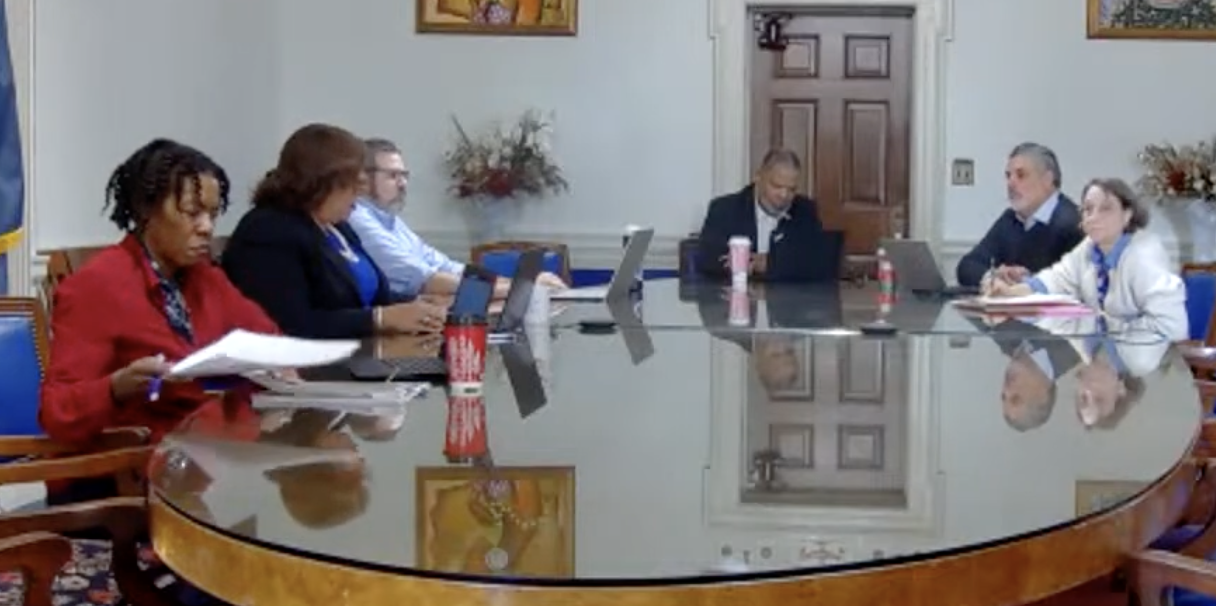
On January 8, 2026, the Mount Vernon Industrial Development Agency (IDA) held a regular morning meeting. On the surface, it appeared routine: minutes approved, invoices paid, financial updates given, and the meeting adjourned without dissent.But as is often the case in Mount Vernon, the real story wasn’t in the votes—it was in the process.This meeting offered residents a preview of how major development decisions are likely to unfold in the months ahead, particularly around land use, tax abatements, and long-term PILOT agreements. And while no major project was approved that day, several warning signs emerged that the public should not ignore.
The Appearance of Consensus — Without Accountability
Two formal actions were taken: approval of prior minutes and authorization to pay invoices. Both passed by voice vote—a collective “aye,” with no record of how individual members voted.Voice votes are legal. They are also opaque.When decisions involve public money, legal fees, or land strategy, voice votes deprive residents of the ability to track patterns, ask informed questions, or hold individual board members accountable. If Mount Vernon is serious about transparency, roll-call votes should be the norm, not the exception.
Millions on Hand, but Fuzzy Rules
The Treasurer reported that the IDA is holding over $2 million in cash, prompting a discussion of whether an investment policy governs its management.One member believed such a policy exists. Others suggested they would “look it up” and return with recommendations.That exchange should concern taxpayers.Public authorities are entrusted with significant sums. Investment policies are not optional memory exercises—they are guardrails. Residents should expect:
- a written, publicly available investment policy,
- clear authorization rules,
- regular reporting on where funds are placed and why.
When governance relies on recollection rather than documentation, risk follows.
Delinquent PILOTs and Selective Urgency
The board discussed delinquent PILOT and administrative fee payments. One delinquent party reportedly paid in full. Another—Dominican Magic—remains unresolved, with litigation promised “in two to three weeks” after pre-notice requirements.Residents should ask:
- How long were these payments overdue?
- How consistently are delinquencies enforced?
- Are all entities treated the same?
PILOTs are not symbolic agreements. They replace taxes. When enforcement lags, the public bears the cost.
Development Before Decisions
The most revealing portion of the meeting was a prolonged debate over whether developers should be given access to publicly owned land—including the ability to conduct borings and preliminary work—before a full cost-benefit analysis is complete.Several members warned that granting early access can create “tacit approval.” Once a developer invests time and money, pressure builds to approve the deal—often in the form of a long-term, 30-year PILOT—regardless of downstream impacts on schools or taxpayers.This concern is not hypothetical. It is rooted in Mount Vernon’s history.The public should be clear:Process steps can quietly lock in outcomes.Land access is not neutral. Momentum is not harmless.
The 30-Year PILOT Assumption
Throughout the meeting, speakers openly acknowledged what residents already suspect: many developers will not proceed without a 30-year tax abatement. Land disposition, financing, and PILOTs are often intertwined from the start, even when officials insist no guarantees are being made.That reality makes early guardrails essential:
- What actions imply commitment?
- What are the exit points if the numbers don’t work?
- How is school-district impact weighed—and when?
Absent clear answers, “process” becomes persuasion.
Messaging the Public — Before the Public Speaks
At several points, leadership addressed “misinformation,” “naysayers,” and public skepticism—before any formal proposal was even on the table.That rhetorical move matters.When officials pre-emptively frame critics as reactionary or uninformed, it often signals that contentious decisions are coming. Residents should see that not as a warning to stay quiet, but as a cue to pay closer attention and demand documents early.
Staffing, Shared Costs, and Blurred Lines
The meeting also included extended discussion about staffing structures shared between the IDA and the City—job descriptions, salaries, benefits, and cost-splitting arrangements.These hybrid structures can work. They can also blur accountability.Residents should expect clarity on:
- who supervises whom,
- which budget pays which costs,
- how performance is measured.
Mount Vernon has paid for ambiguity before.
What Neighbors Should Watch Next
This meeting did not approve a major deal. But it laid the groundwork for several that are coming.Residents should stay focused on:
- any request for land access or site control,
- financial analyses for LibrarySquare and GDC,
- proposals involving long-term PILOTs,
- whether votes are taken by roll call or by voice,
- whether policies are produced—or merely promised.
A Simple Standard
Mount Vernon does not need to be anti-development to be pro-accountability.A fair standard is this:
No momentum without math.
No access without analysis.
No approvals without named votes.
That is not obstruction.That is governance.The Voice of Mount Vernon will continue to read the transcripts, follow the process, and ask the questions residents are too often expected to ask after the fact.
Stay informed. Stay involved. The time to act is NOW!
The Voice of Mount Vernon is a community watchdog group that provides editorialized opinion on local leadership. We are not affiliated with any political party. Our platform includes news briefs, editorials, and independently written Op-Eds. We are open to relevant corrections. Voicing concerns under the First Amendment.