Council Meeting Reflections - Submitted by a Resident
Originally Published on 12/17/25 - https://conta.cc/4p2C8dN
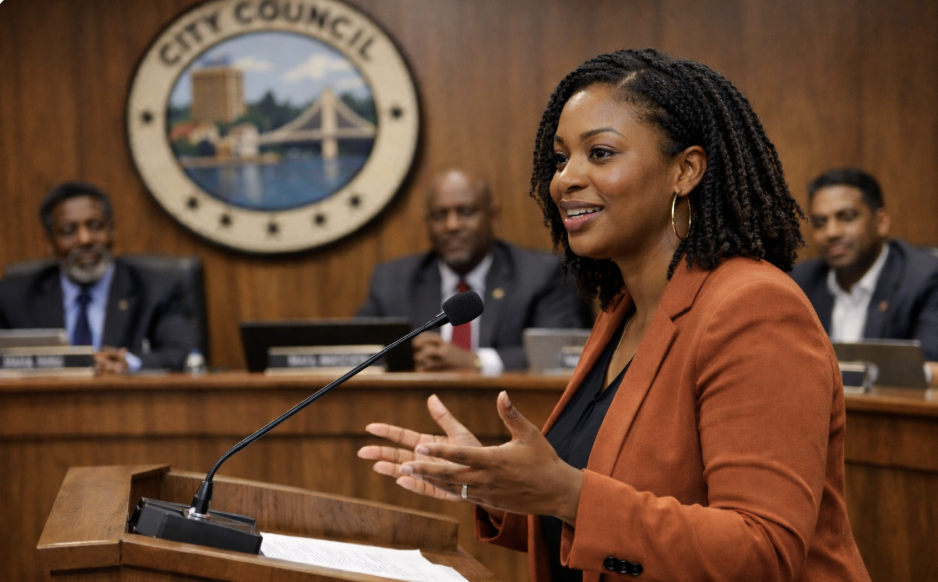
Editor’s Note: The following reflection was submitted by a Mount Vernon resident who spoke during the December 16, 2025 City Council meeting. The views expressed are her own.
Submitted by a Mount Vernon Resident
Dear residents,
Many of you have not had the same access to information—or the same exposure to City Hall—that I have had over the past several years. That context matters for what I said at the December 16, 2025, City Council meeting and why I felt compelled to speak.That night, I expressed disappointment in Councilman Edward Poteat. Of all the council members, he was arguably the one who most clearly understood how and why cities like Mount Vernon fail.
Councilman Poteat wrote a book titled The Fiscal Cliff: The Financial Crisis Facing American Cities. In plain language, it lays out how cities slide into crisis: leaders avoid structural reform, expenses rise faster than revenues, middle‑class residents and businesses leave, and politicians lean on flashy development deals instead of fixing the underlying math. Over time, that path leads to service cuts, displacement, and the sale of public assets to stay afloat.
Mt. Vernon today looks very close to the late‑stage scenario he described.That is the heart of my disappointment. Because of his experience, I believe Councilman Poteat could see these risks more clearly than most. From my vantage point as a resident following council meetings, I did not often see him publicly, consistently challenging budgets or policies that reflected the very patterns he warned about in his own work.
At times, he abstained from key votes. While abstaining is not the same as voting “yes,” it can allow problematic measures to advance when there is no organized opposition. For residents watching, that can feel indistinguishable from going along.
Yet I rarely heard that level of clear, sustained advocacy from him in public forums. That gap—between the insight in his book and the caution I perceived on the council—is why I feel let down.
As for his decision not to seek re‑election, I do not know his reasons. As a resident, I can only say that, given what he knows about city decline, his limited visible push for deep reform during his time in office will always feel like a missed opportunity for Mount Vernon.
Additional ConcernsRegarding Councilperson Danielle Browne, my concern is about outcomes, not qualifications. There is a real risk that lien sales and expedited processes become the default, routinely pushing homeowners out rather than serving as a last resort. Property taxes must be paid, full stop. But the city’s power must be exercised with utmost caution, transparency, and a commitment to preserving community.
Regarding Councilman Boxhill: he appears to be a decent person. However, I do not believe immediate family members of elected officials should hold City positions after their relative has been elected. Even when nothing illegal occurs, it creates the appearance of impropriety and makes officials vulnerable to pressure. There are allegations circulating that Councilman Boxhill told others his wife—who joined the Mount Vernon Police Department this year—had her job threatened if he did not go along with the mayor’s wishes. If true, this would be an unacceptable example of the coercion such situations invite.
To me, it seems to tilt toward accommodating developers rather than protecting long‑time residents. This is how gentrification often works: policies and practices that look technical or neutral on paper end up displacing existing communities. And history shows that the very officials who enable those dynamics are often pushed aside themselves once the new interests are firmly in place.
Finally, there are widespread rumors involving Comptroller Morton’s office—specifically, that several staff members are congregants at his church, and that one individual may have received a substantial property‑tax reduction. At the same time, neighboring homeowners paid the full amount. If the claims are accurate, it would not only be unfair and unethical, but deeply troubling.
A Path ForwardI share all of this not to inflame, but to inform—and to insist that these questions be confronted in the open. Silence is how cities are lost.
Therefore, this moment demands more than discussion; it requires actionable scrutiny. I call for:
- Independent Review: A public audit or independent assessment of foreclosure and lien-sale protocols to ensure they are fair, transparent, and truly used as a last resort.
- Clear Policy: The immediate drafting and adoption of a strict nepotism and conflicts-of-interest ordinance to prevent the hiring of elected officials’ immediate family and to shield all public employees from political pressure.
- Public Accountability: A formal, public address by the Comptroller’s office to clarify the rumors of preferential treatment, restoring trust through transparency.
Our city’s future depends on systems that are fair and resistant to coercion—whether from developers, political pressure, or silence. It is time we build them.
Thank you for the opportunity to reiterate what was presented.
Shez Darden
Stay informed. Stay involved. The time to act is NOW!